Dr. Mansour Hawsawi
Ph.D. in Electrical and Computer Engineering | Oakland University
Mansour Zubair Hawsawi earned his Ph.D. at Oakland University under Mohamed Zohdy. His background combines controls and industrial automation with power electronics and electrical systems. He has hands-on experience with PLC-based projects, laboratory instruction, motor drives and electrical protection. His research focuses on high-efficiency DC-DC conversion, Fibonacci switched-capacitor converters, maximum power point tracking and renewable energy integration.
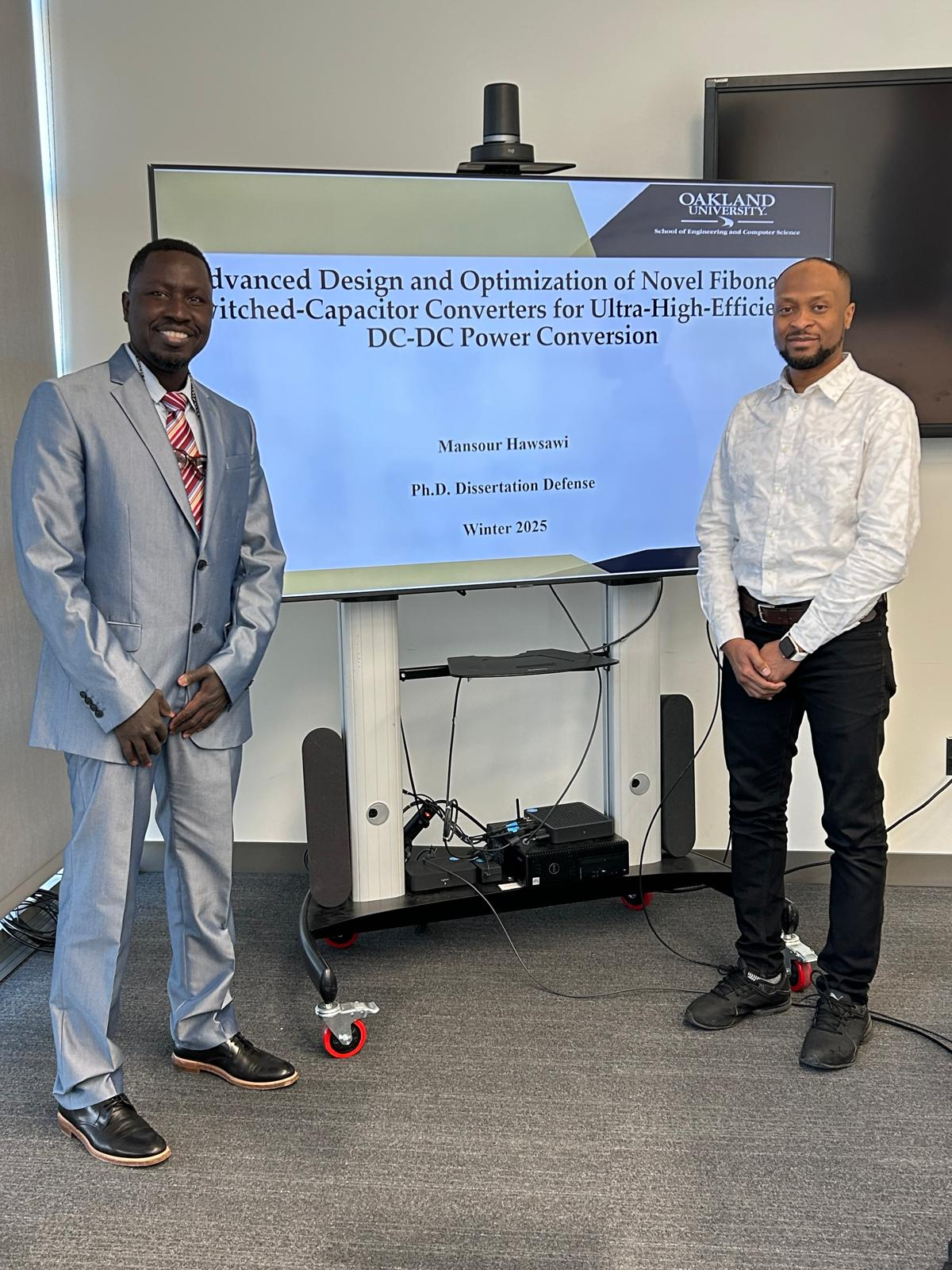
Doctoral research (2025): Advanced Design and Optimization of Novel Fibonacci Switched-Capacitor Converters for Ultra-High-Efficiency DC-DC Power Conversion
Education
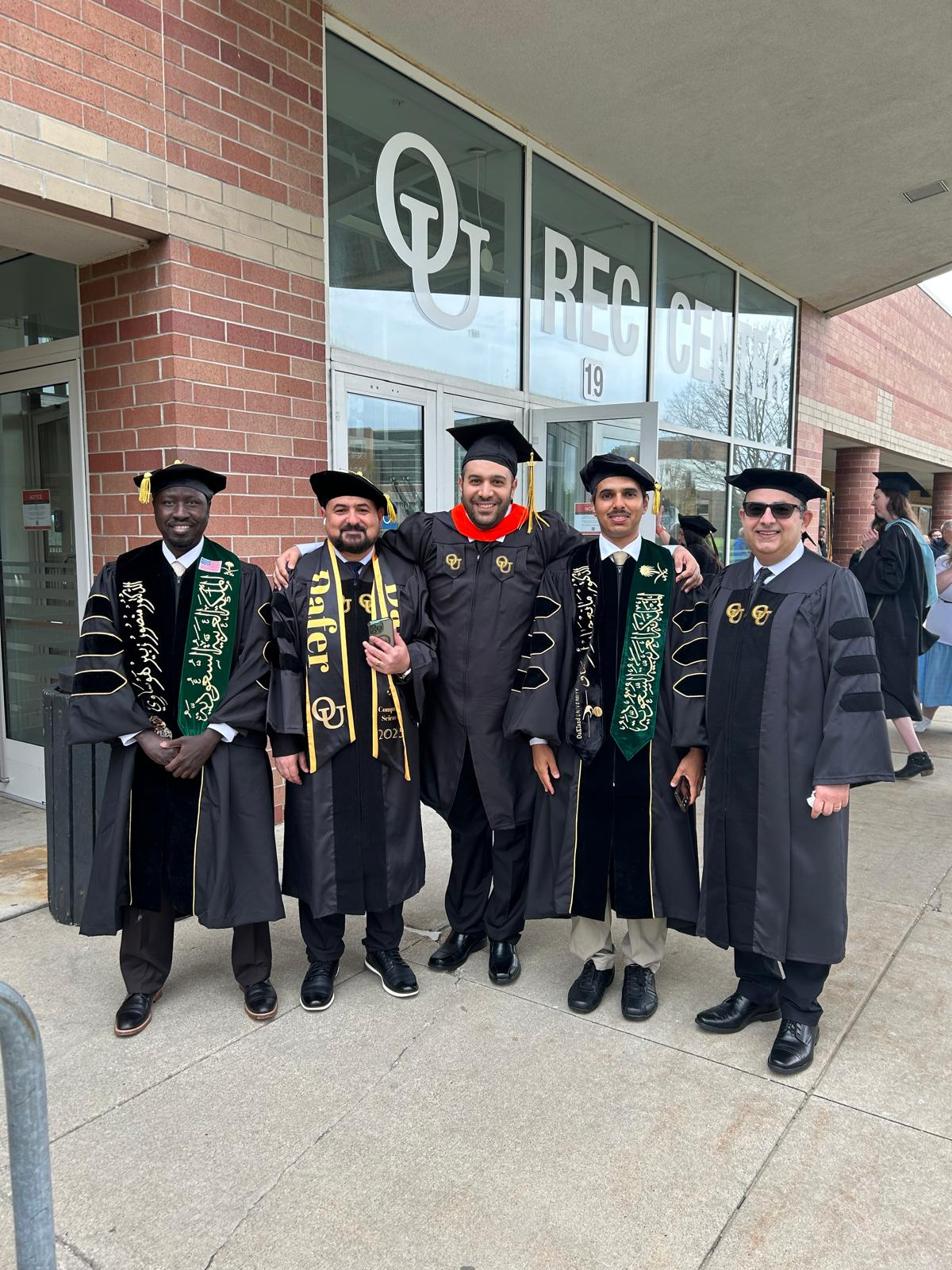
- Ph.D. in Electrical and Computer Engineering — Oakland University, March 2025
- M.S. in Electrical Engineering — Wilkes University, May 2015
- B.S. in Engineering Technology (Electrical Technology) — Temple University, May 2013
- Associate Degree in Engineering Technology (Electrical Power) — College of Technology, Makkah, May 2004


Engineering experience & expertise
Controls and automation engineering · Power electronics · Electrical systems
Professional experience
- Research & laboratory development: Converter simulation and hardware validation, control algorithms, motor-drive experiments and practical student instruction.
- Industrial automation: PLC-based motor control, sequential processes, sensor integration, conveyor projects, HMI interfacing and fault diagnostics.
- Low- & medium-voltage electrical engineering (2016–2018): Maintenance, commissioning, protection relays, control schematics and SCADA monitoring.
- Maintenance electrician (2004–2007): Control panels, motor starters and industrial electrical troubleshooting.
Technical skills
- PLC platforms: Siemens S7-1200 and Allen-Bradley CompactLogix.
- Engineering software: MATLAB/Simulink, LabVIEW, TIA Portal, Studio 5000 Logix Designer and FactoryTalk View.
- Control methods: Model predictive control, PID tuning, sliding-mode control and digital control.
- Power systems: DC-DC and switched-capacitor converters, inverter control, motor drives, protection and renewable energy interfaces.
Training & languages
- Solar Energy: Photovoltaic (PV) Energy Conversion.
- Project Management Preparation.
- Six Sigma Yellow Belt.
- Electrical Distribution and Design.
- Languages: Arabic and English.
Professional background, skills and training summarized from the resume supplied to ICCC.
Research statistics
Verified ICCC collection
- Documented research records
- 5
- Publication records
- 4
- Degree research records
- 1
Indexed citation figures
- Indexed research works
- 3
- Citations to indexed works · all years
- 77
- Citations received · 2024–2026
- 69
- 202430
- 202522
- 202617
Annual citations: 2024: 30 · 2025: 22 · 2026: 17. Retrieved 2026-10-24. Source 1Checked 2026-10-24
ICCC counts cover the verified collection. Citation figures cover only the displayed indexed source records, not guaranteed career totals. OpenAlex coverage and author clustering can be incomplete. These figures differ from Google Scholar and include self-citations. Compare available member metrics →
Research & Publications
4 publications · 1 degree thesis · Newest first
Authored and co-authored publications, with authors shown in the source order. This list reflects the records currently verified by ICCC and may not be complete.
Advanced Design and Optimization of Novel Fibonacci Switched-Capacitor Converters for Ultra-High-Efficiency DC-DC Power Conversion
View DissertationStart here · New researcher guide
A reading workflow, not an author-verified summary. Confirm all details in the original publication.
- Check the fit. Read the abstract and introduction. Write down the research question and explain how it relates to your idea.
- Understand the method. Identify the approach, assumptions, data and evaluation measures in the paper.
- Check reproducibility. Look for linked code, datasets and supplementary material. Availability has not been verified by ICCC.
- Find your next question. Read limitations and future work. Propose one extension and check newer literature before claiming a research gap.
- Plan a first experiment. Define a baseline, the change you will test and a measurable outcome. Discuss feasibility with your supervisor.
For questions or collaboration, visit the member profile and use a listed contact channel. Authorship and collaboration require agreement.
A Comprehensive Review of Geothermal Heat Pump Systems
View PublicationOpenAlex: 10 citations Source ↗
Start here · New researcher guide
A reading workflow, not an author-verified summary. Confirm all details in the original publication.
- Check the fit. Read the abstract and introduction. Write down the research question and explain how it relates to your idea.
- Understand the method. Identify the approach, assumptions, data and evaluation measures in the paper.
- Check reproducibility. Look for linked code, datasets and supplementary material. Availability has not been verified by ICCC.
- Find your next question. Read limitations and future work. Propose one extension and check newer literature before claiming a research gap.
- Plan a first experiment. Define a baseline, the change you will test and a measurable outcome. Discuss feasibility with your supervisor.
For questions or collaboration, visit the member profile and use a listed contact channel. Authorship and collaboration require agreement.
Optimization of Solar System for Rural Electrification in as Suwadirah (Saudi Arabia)
View PublicationStart here · New researcher guide
A reading workflow, not an author-verified summary. Confirm all details in the original publication.
- Check the fit. Read the abstract and introduction. Write down the research question and explain how it relates to your idea.
- Understand the method. Identify the approach, assumptions, data and evaluation measures in the paper.
- Check reproducibility. Look for linked code, datasets and supplementary material. Availability has not been verified by ICCC.
- Find your next question. Read limitations and future work. Propose one extension and check newer literature before claiming a research gap.
- Plan a first experiment. Define a baseline, the change you will test and a measurable outcome. Discuss feasibility with your supervisor.
For questions or collaboration, visit the member profile and use a listed contact channel. Authorship and collaboration require agreement.
Optimal Design and Operation of Hybrid Renewable Energy Systems for Oakland University
View PublicationOpenAlex: 32 citations Source ↗
Start here · New researcher guide
A reading workflow, not an author-verified summary. Confirm all details in the original publication.
- Check the fit. Read the abstract and introduction. Write down the research question and explain how it relates to your idea.
- Understand the method. Identify the approach, assumptions, data and evaluation measures in the paper.
- Check reproducibility. Look for linked code, datasets and supplementary material. Availability has not been verified by ICCC.
- Find your next question. Read limitations and future work. Propose one extension and check newer literature before claiming a research gap.
- Plan a first experiment. Define a baseline, the change you will test and a measurable outcome. Discuss feasibility with your supervisor.
For questions or collaboration, visit the member profile and use a listed contact channel. Authorship and collaboration require agreement.
Conventional and Switched Capacitor Boost Converters for Solar PV Integration: Dynamic MPPT Enhancement and Performance Evaluation
View PublicationOpenAlex: 35 citations Source ↗
Start here · New researcher guide
A reading workflow, not an author-verified summary. Confirm all details in the original publication.
- Check the fit. Read the abstract and introduction. Write down the research question and explain how it relates to your idea.
- Understand the method. Identify the approach, assumptions, data and evaluation measures in the paper.
- Check reproducibility. Look for linked code, datasets and supplementary material. Availability has not been verified by ICCC.
- Find your next question. Read limitations and future work. Propose one extension and check newer literature before claiming a research gap.
- Plan a first experiment. Define a baseline, the change you will test and a measurable outcome. Discuss feasibility with your supervisor.
For questions or collaboration, visit the member profile and use a listed contact channel. Authorship and collaboration require agreement.
No publications match your search.